When an infrastructure issue disrupts an entire industry, the cost of not knowing can become a business problem.
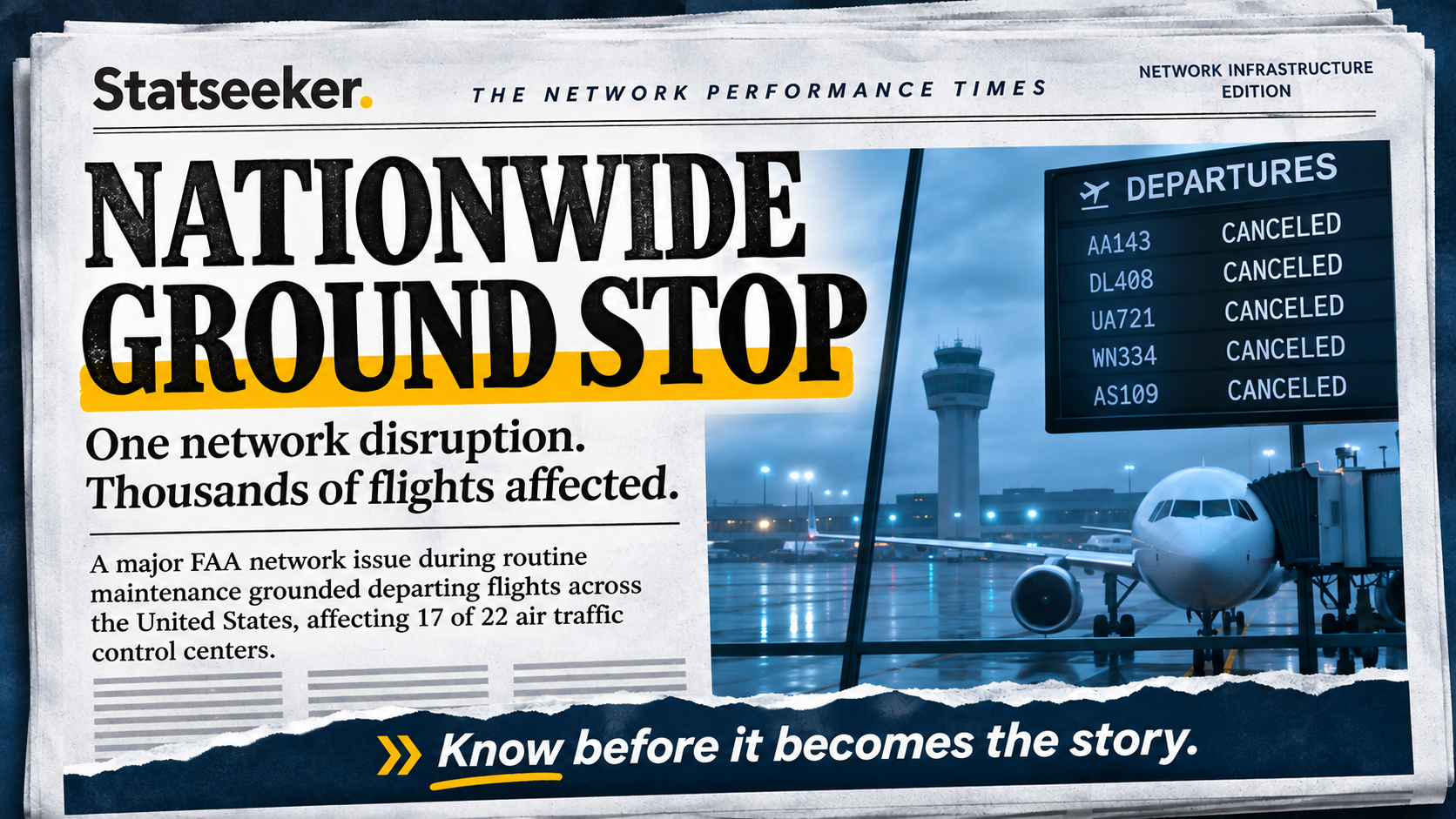
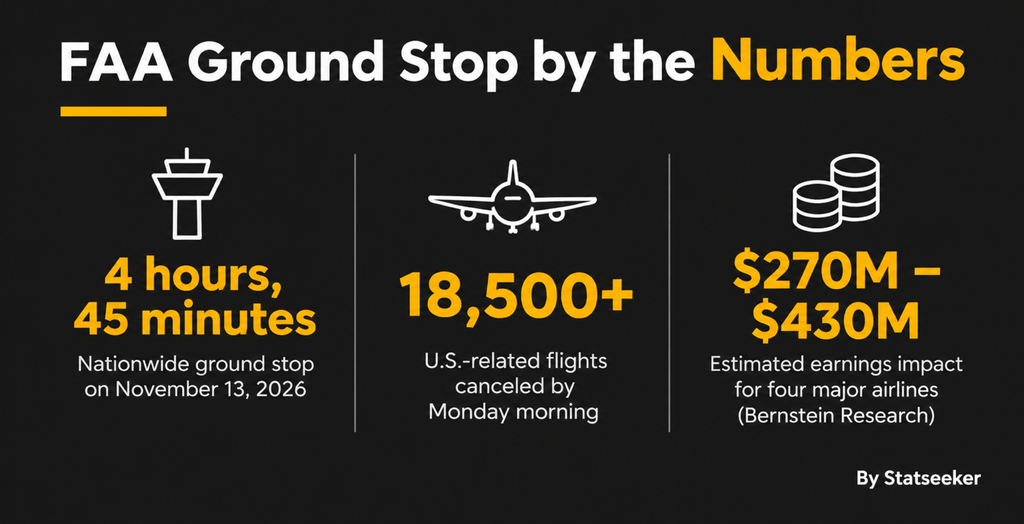
Last week, we covered the FAA telecommunications disruption that grounded thousands of flights across the United States.
Now comes the financial side of the story.
Investment research firm Bernstein estimated that the four largest U.S. airlines could face a combined $345 million reduction in pretax earnings following the November 13 ground stop.
That’s an estimate, not a finalized loss. But it’s a pretty significant reminder that technology disruptions don’t stay within IT departments.
They affect the business.
When technology stops, the costs don’t
We tend to measure outages in minutes or hours. But businesses measure them differently.
For airlines, it’s canceled flights, displaced crews, and stranded passengers. For retailers, interrupted transactions. For distribution centers, trucks sitting idle while products and employees are ready to move.
The infrastructure problem doesn’t have to be particularly large for the financial consequences to be.
And that raises an interesting question.
How much should an organization invest in understanding its network before something goes wrong?
A fraction of the budget. A clearer picture.
Southwest Airlines previously outlined approximately $1.7 billion in planned technology investments for 2024.
Consider an illustrative allocation of just 0.01% of a technology budget that size toward network performance visibility.
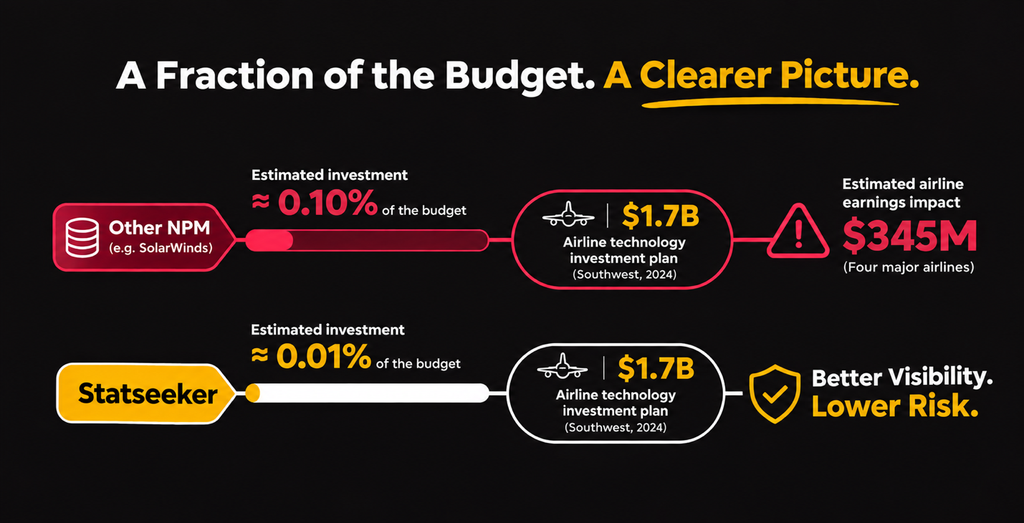
It’s a tiny fraction. Not a Statseeker price quote or a guarantee against downtime, but enough to make the financial conversation worth having.
Especially when the consequences of disruption can run into millions.
Of course, we can’t say additional monitoring would have prevented the FAA incident.
But the broader question still matters: Are your existing monitoring investments giving your engineers the information they need?
You have the monitoring. But do you still have the evidence?
Here’s something that doesn’t get discussed enough outside network engineering teams.
Some network monitoring platforms average historical performance data over time.
That can be useful for long-term reporting. Less useful when you’re investigating a brief spike from three months ago.
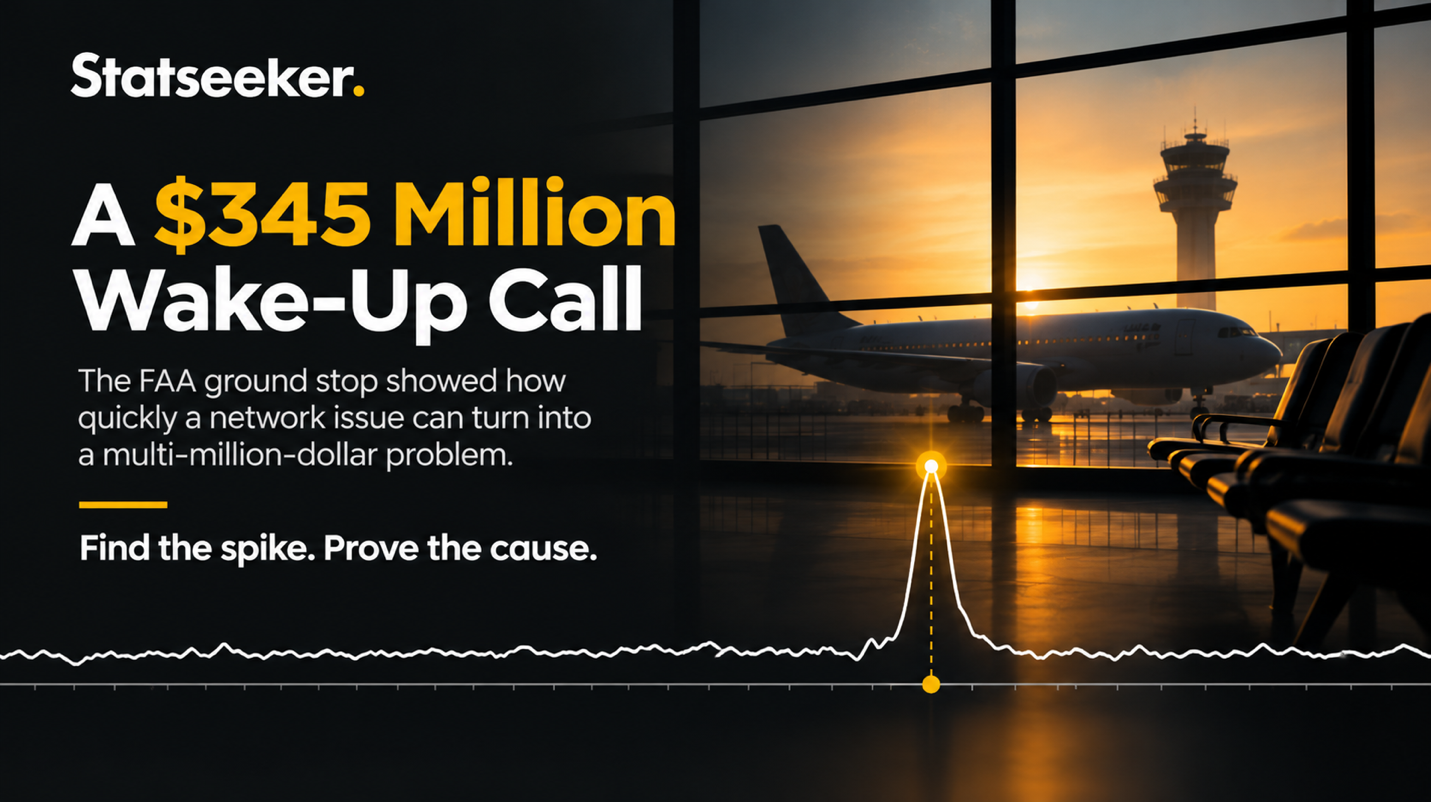
Imagine an interface operating at 20% utilization for 59 minutes, then reaching 100% for one minute.
The hourly average? Approximately 21.3%.
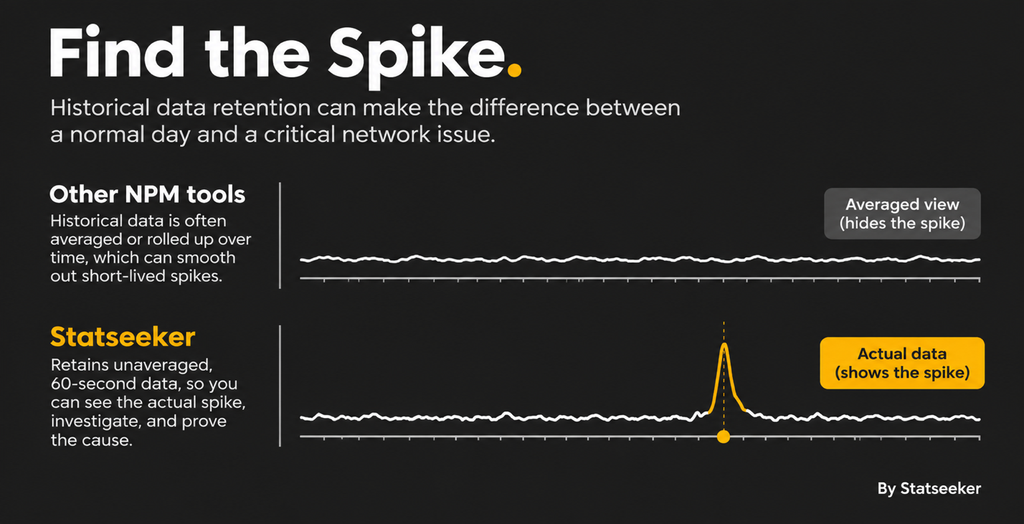
Looks pretty healthy, doesn’t it?
Except the spike was there.
You can’t investigate historical detail your monitoring platform no longer retains.
Statseeker preserves original 60-second polling data without historical averaging, giving engineers the evidence to investigate recurring spikes, capacity issues, and network performance problems.
And sometimes, that evidence helps demonstrate that the network wasn’t the problem at all.
For an engineer, that means fewer assumptions and better troubleshooting.
For an executive, it means more informed decisions about operational risk.
Better visibility shouldn’t mean bigger complexity
We know many organizations already invest significantly in network monitoring and enterprise observability.
Those platforms provide value. The question is whether you’re getting the network visibility, coverage, and historical detail you’re paying for.
That’s where Statseeker takes a different approach.
For 30 years, we’ve focused on helping network teams understand their infrastructure, without unnecessary complexity.
Today, Statseeker supports organizations worldwide, including Fortune 500 enterprises, with monitoring capabilities designed to scale to millions of interfaces across large deployments.
Our approach is straightforward: granular historical data, 60-second polling, and predictable licensing without surprise platform fees.
And because Statseeker runs within your own infrastructure—on physical servers, virtual machines, or self-hosted cloud environments—you retain control over your data and security perimeter.
No need to compromise network coverage simply because another platform becomes expensive as your environment grows.
Maybe the most expensive thing is not knowing
The FAA incident is still being investigated, and we don’t know whether different monitoring practices could have changed the outcome.
What we do know is that engineers need reliable evidence, and executives need confidence that their infrastructure risks are understood.
Sometimes, better visibility isn’t about spending more.
It’s about making sure the money you’re already spending is delivering the answers you need.
So, before renewing your current network monitoring subscription, perhaps it’s worth comparing what you’re paying against what you’re actually getting.
You might be surprised.
Explore Statseeker pricing and talk to our team
Know before it becomes the story.